Multiple days guided through the stunning landscape of Central Australia leave the hiker enriched beyond expectations.
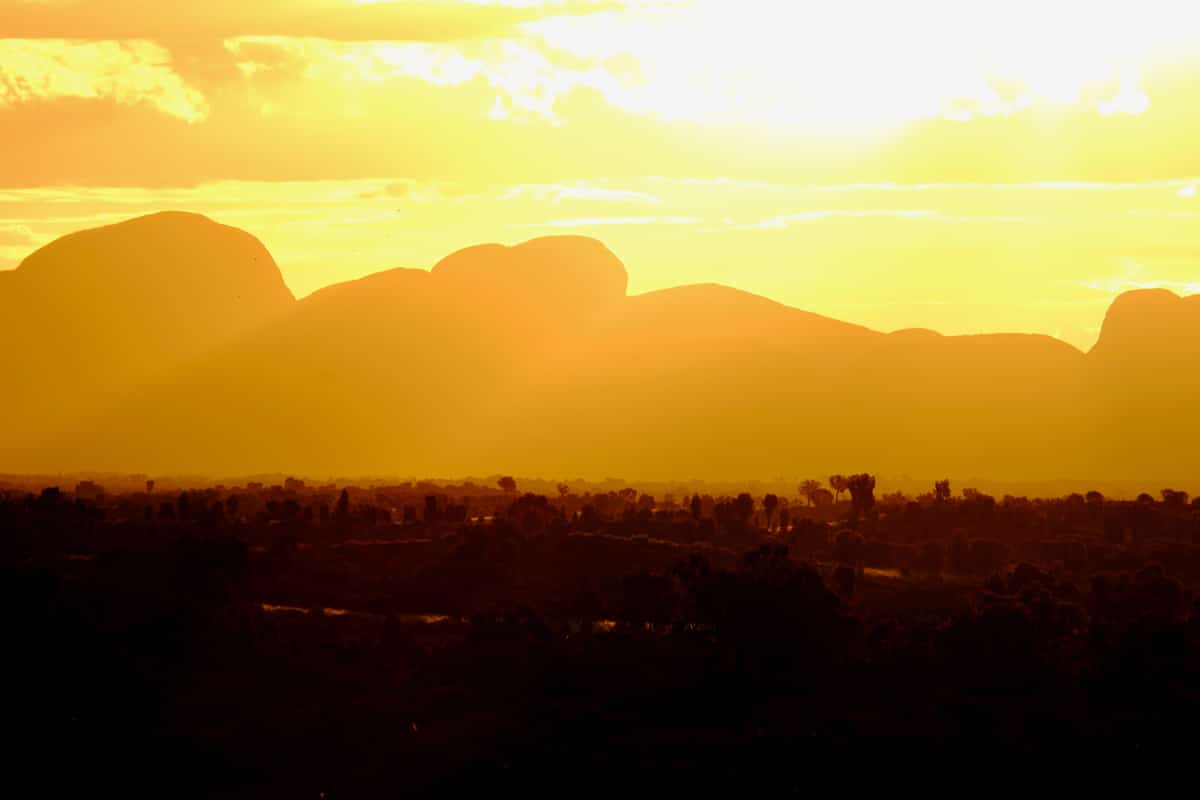
This is one of those multi-day hikes in Australia where you pinch yourself that we are fortunate to live in such a diverse environment overlaid with thousands of generations of cultural and scientific knowledge. If, like us, you are unfamiliar with Central Australia nothing can prepare you for the up-close presence of Uluru, Kata Tjuta (‘many heads’ in Pitjantjatjara, a language of Anangu) and the beauty of this semi-arid landscape. The five-day hike has been a 10-year collaboration between Tasmanian Walking Company (TWC), Anangu custodians and Parks Australia. Whilst the walk is through Uluru-Kata Tjuta National Park, the area is culturally significant under Tjukurpa (connection to Country) and the fragile landscape is too sensitive to have unguided visitors.
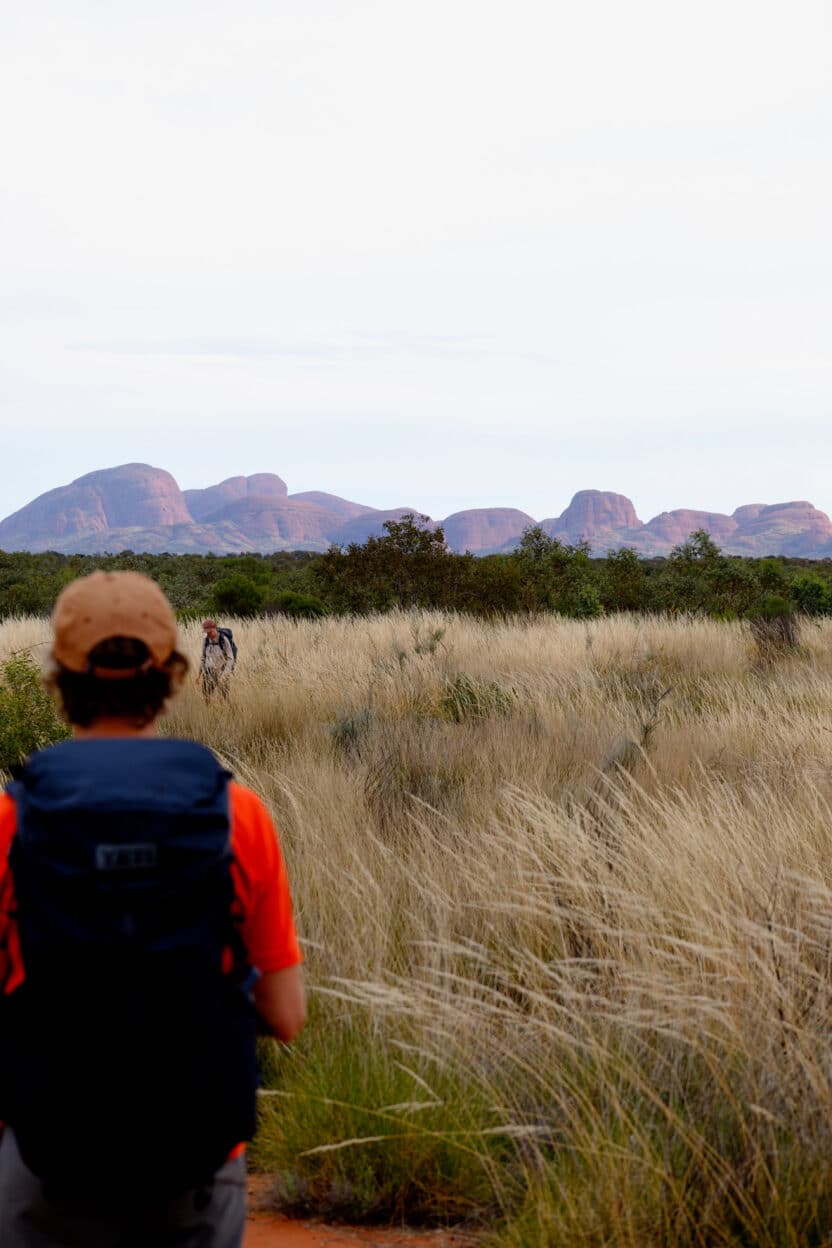
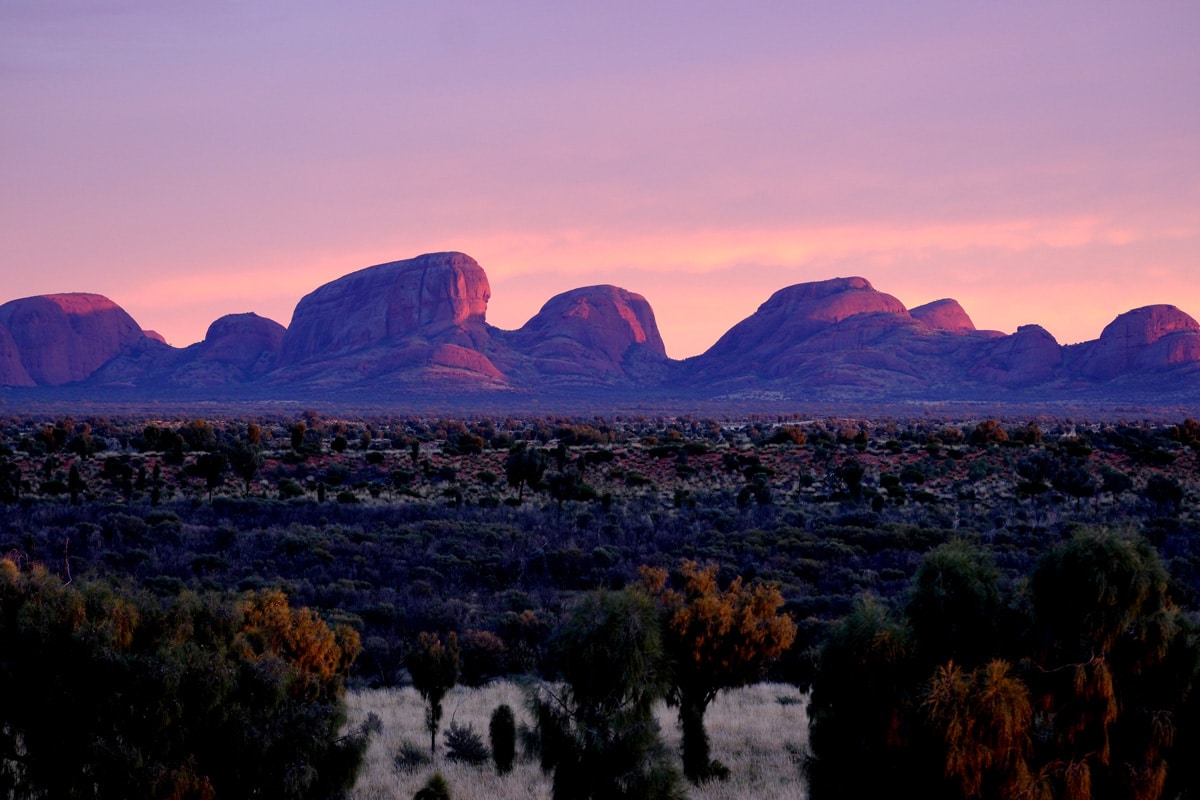
The view of Kata Tjuta literally stops you in your tracks.
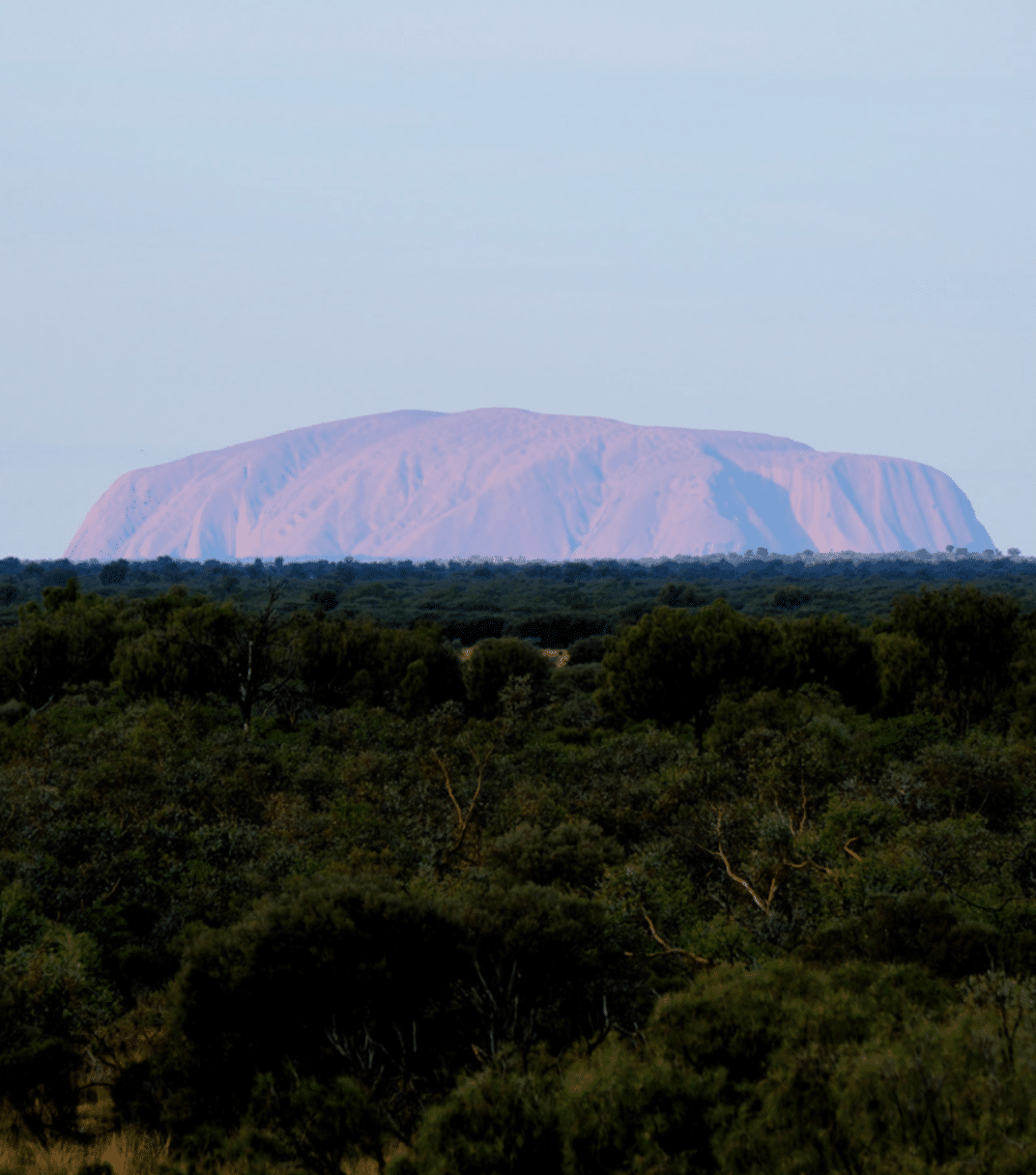
During the five day hike, the iconic Uluru begins to dominate the vista.
The partnership has seen TWC engage Troppo Architects to design the two eco camps and Mala Lodge and cabins. Over 70 prefabricated pods were used during the construction and airlifted in by helicopter in a low impact and highly considered operation. On the morning of the first day of the hike, we met under a wiltja (shelter) with Anangu traditional owner TJ (Tjiangu). With the dramatic monolith of Uluru as a backdrop, TJ explained the connectedness between flora and fauna and the elements. We then headed down the highway to the trailhead of the Valley of the Winds Circuit at Kata Tjuta. The Karu lookout is soon reached with a view across the mulga scrub to the north. On each side sheer walls of conglomerate sediments deposited 550 million years ago and compressed, folded and revealed by erosion are a testament to the age and harshness of this ancient landscape. The loop continues along dry riverbeds. Our guides, Kate and Joe, share their passion and knowledge of this region as they explain details of the local flora and fauna.
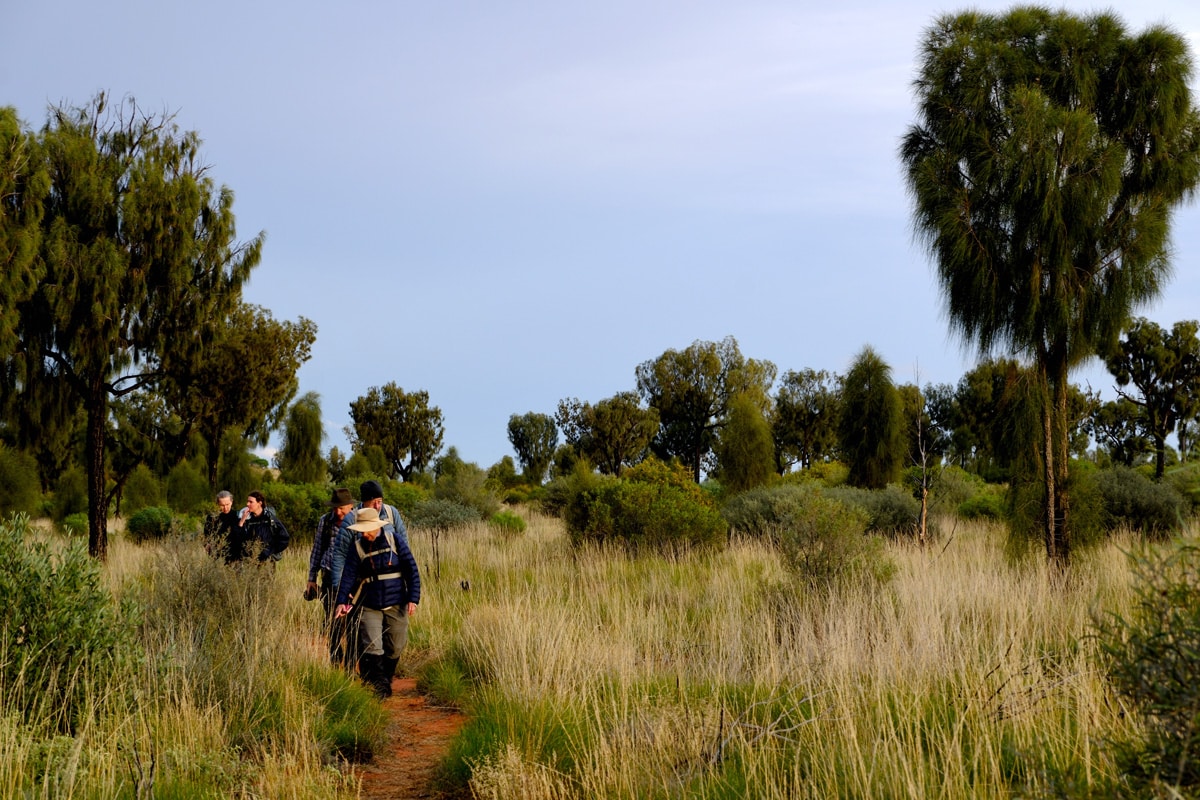
With heads spinning with geological explanations of orogeny, schistosity and tectonic tilting, we leave Kata Tjuta by shuttle bus. The Tali eco camp is reached via a stroll through the mulga scrub. Two person tents on raised platforms are oriented for privacy and to the magnificent views. We are treated to dinner at an outdoor table under the mesmerising Milky Way.
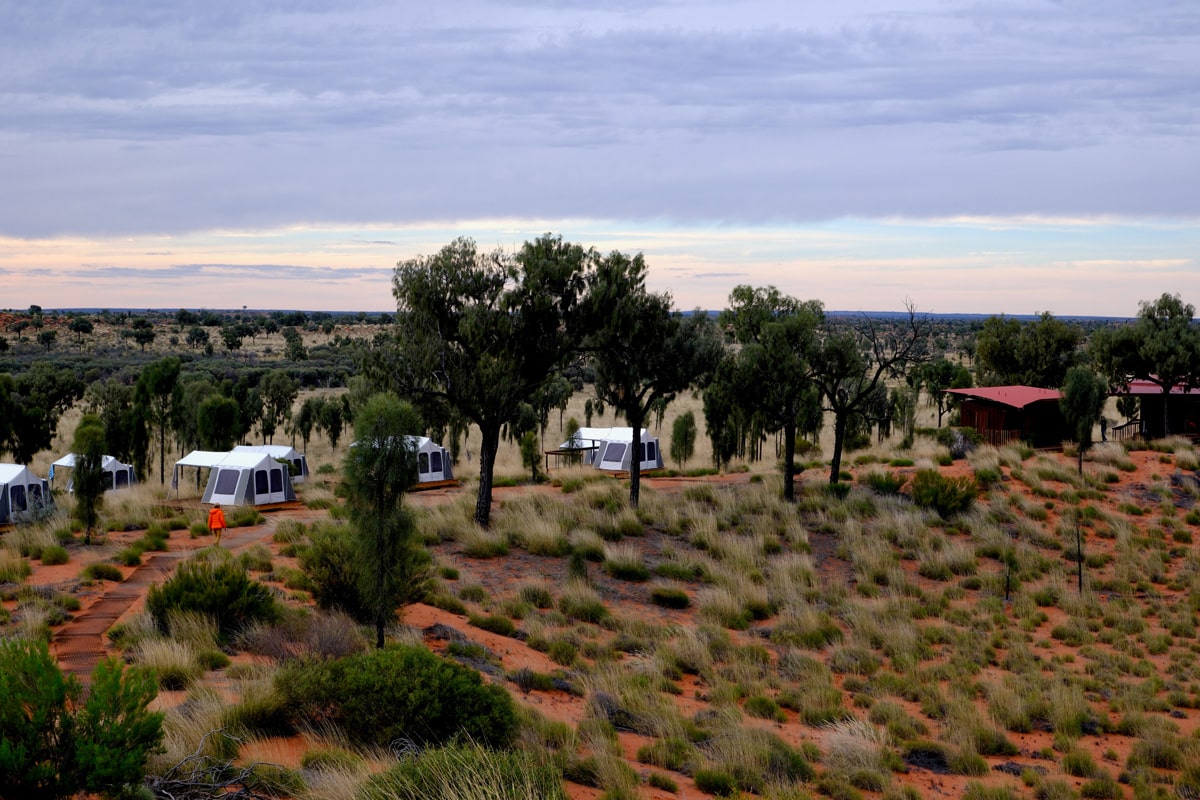
In the dark on the second day, we break camp guided by head torches to reach a sand hill as dawn breaks. With an unseasonally warm walpa (wind) from the north and broken high cloud we are greeted to a kaleidoscopic sunrise lighting the domes of Kata Tjuta. On reaching the second camp in the early afternoon the temptation is to recline in the comfort of the communal lodge.
But it is the benches of the lookout that draw me with the westing sun creating everchanging hues across the vast plain laid out below.
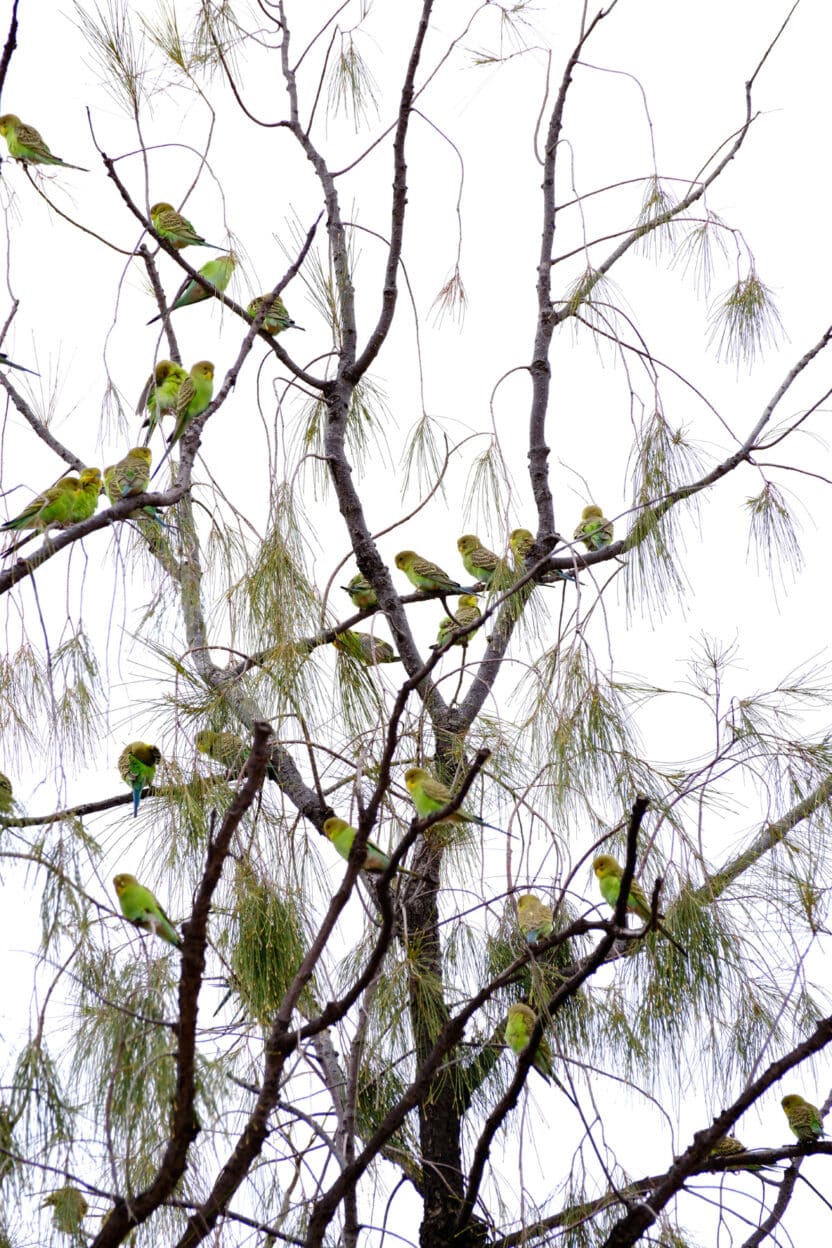
Budgerigars, zebra finches and willy wagtails flit amongst the low shrubs in the still afternoon. During the third day the landscape continues to subtly alter. We wander through glades of casuarina, head up ridges covered with spinifex and lookout on plains of mulga.
Clear shallow reefs along Blanche Point.
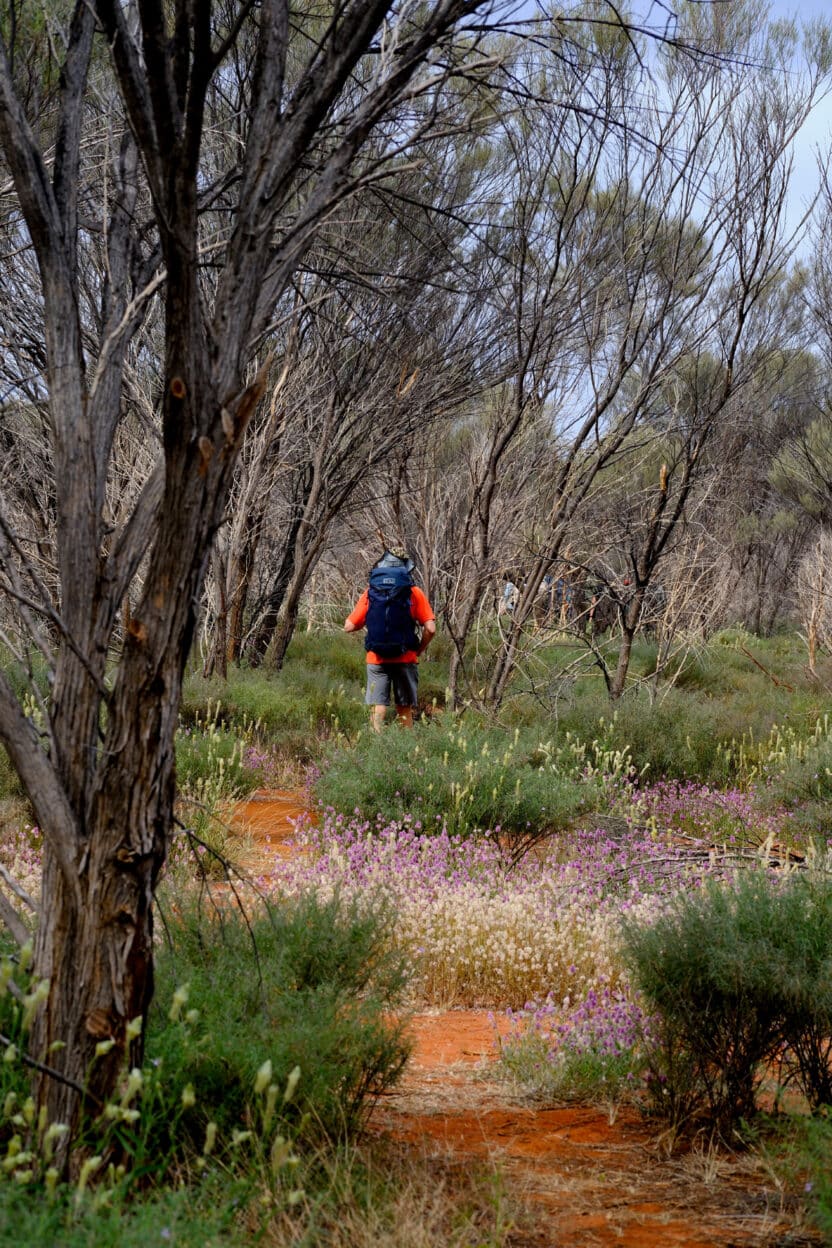
The purple flowers of hardy perennial Artichoke thistle (Cynara cardunculus).
After 18 kilometres of easy walking across the former inland sea, we arrive at Mala Lodge nestled amongst the rolling dunes. Again, we are treated to a captivating view as the sun sets, this time with Uluru drawing the gaze some eight kilometres to the north. After dinner we rug up and TJ joins us for a fascinating and wide-ranging fireside chat. Heading off on our fourth day along the barely discernible track we soon pause. The guides then set us off in solo formation with just our own thoughts and birdsong for accompaniment This is a meditative part of the hike as we experience the rhythm of the country without conversation. As we regroup, we follow a 170-hectare vermin proof fenced enclosure that has been successful in the rejuvenating a population of mala (rufus-hare wallaby), a tiny marsupial weighing around one kilogram.
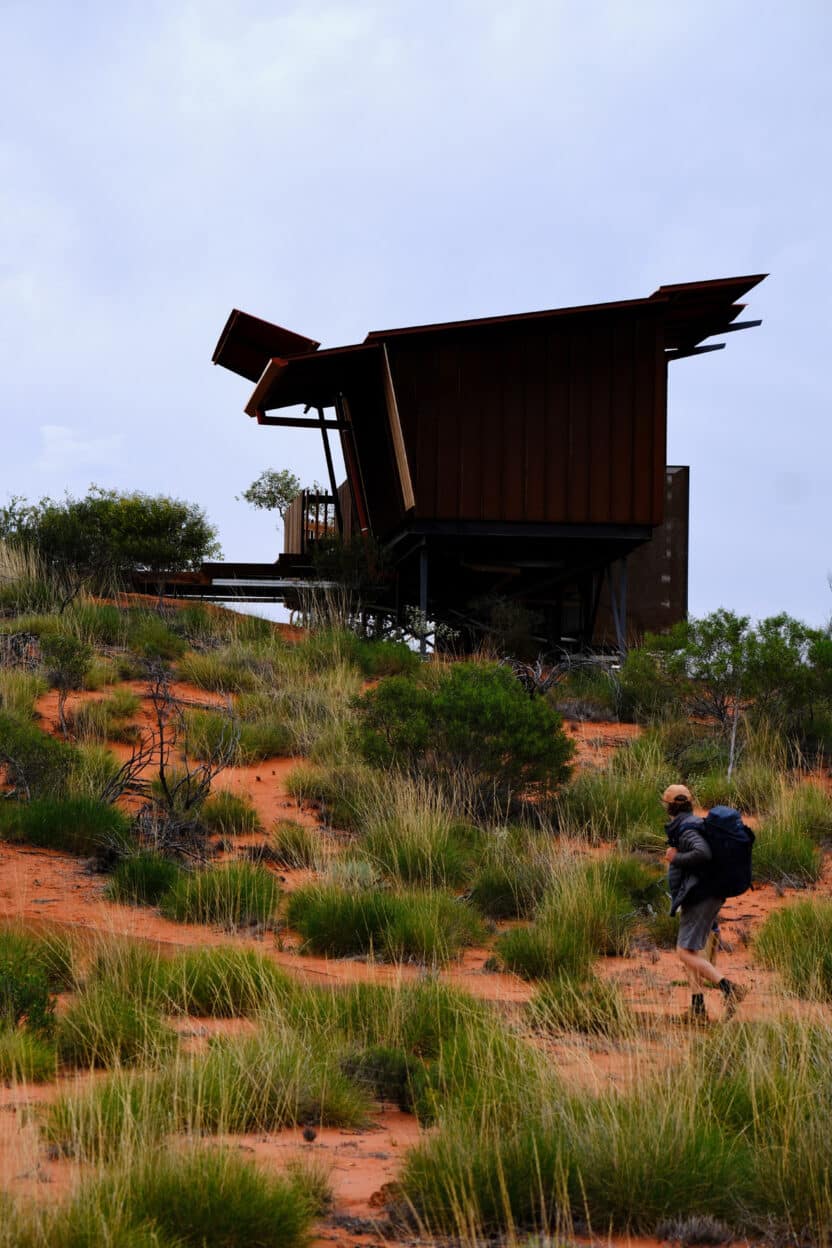
The infrastucture designed by Troppo Architects lightly touches the landscape.
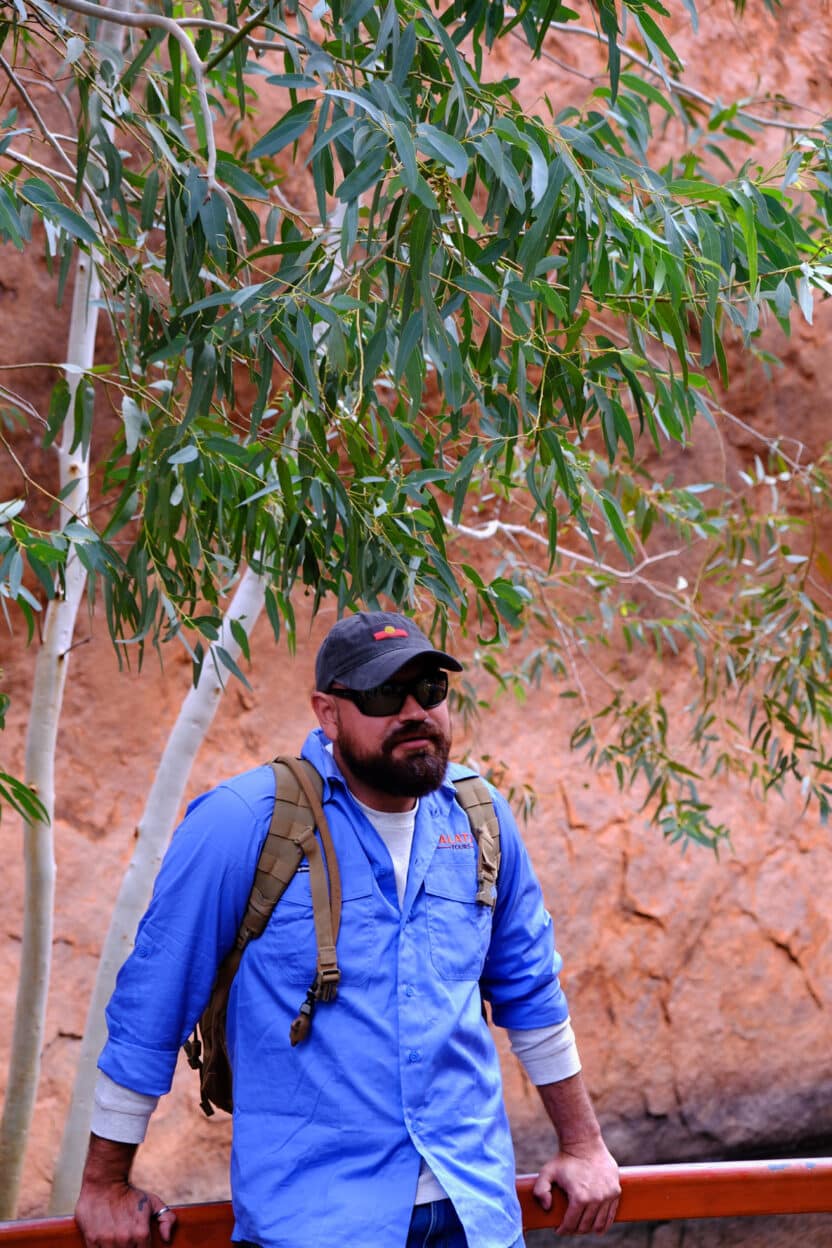
TJ (Anangu custodian) sharing details of Tjurkurpa (caring for country, creation stories, law).
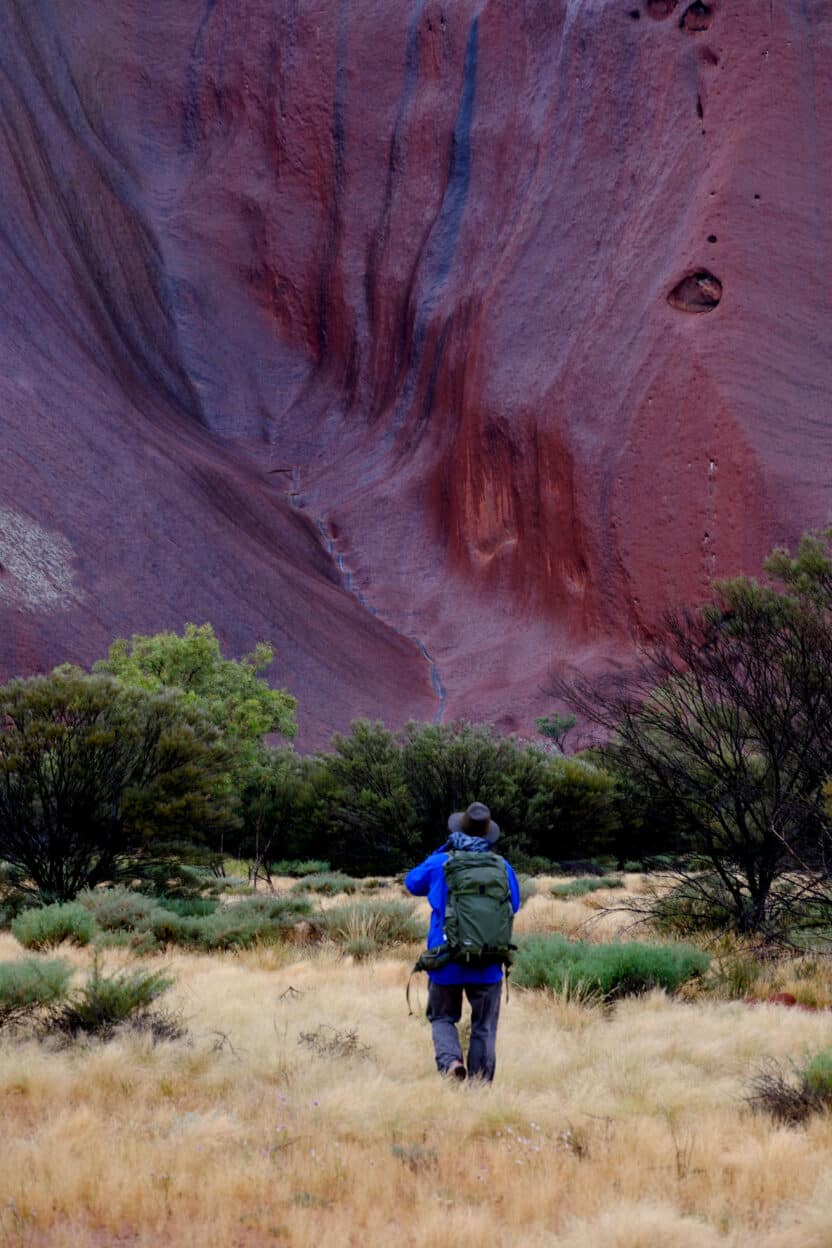
The base of Uluru is soon reached, and we catch up with TJ and follow the Liru Walk to the Mututjulu Waterhole. The tranquil location is a deeply sacred location for Anangu custodians and is one of the few permanent water sources at Uluru. TJ provides samples of local bush foods including tjantu (bush tomatoes), ili (figs) and arnguli (bush plums). TJ also explains about this resource-rich environment and the uses of bloodwood sap, kangaroo tendons and emu bush. During the final dinner a spectacular lightning show heralds an overnight torrential downpour. After breakfast we head by shuttle van to Uluru as the sun breaks through. Waterfalls are abundant and we walk to Kantju Gorge and are astounded to observe a crystal-clear lake has formed overnight.
This is a phenomenal five-day experience on so many levels. The vistas will long be imprinted on the mind, however it is the learnings of Country and Tjukurpa and the immersion in the rhythm of this environment that will reverberate forever.