A short walk with a long history that takes you deep into one of the Australian environmental movement’s most iconic watersheds.
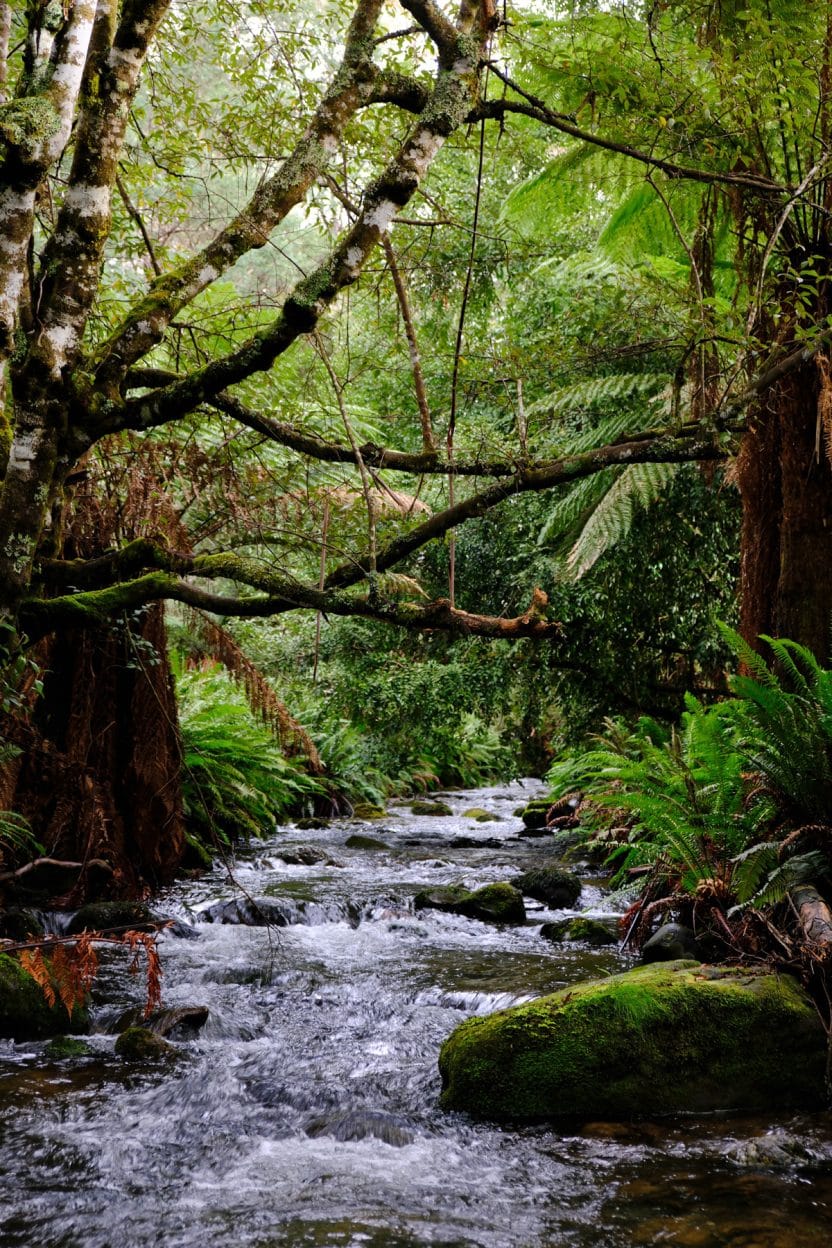
The Liffey River surrounded by dense temperate rainforest.
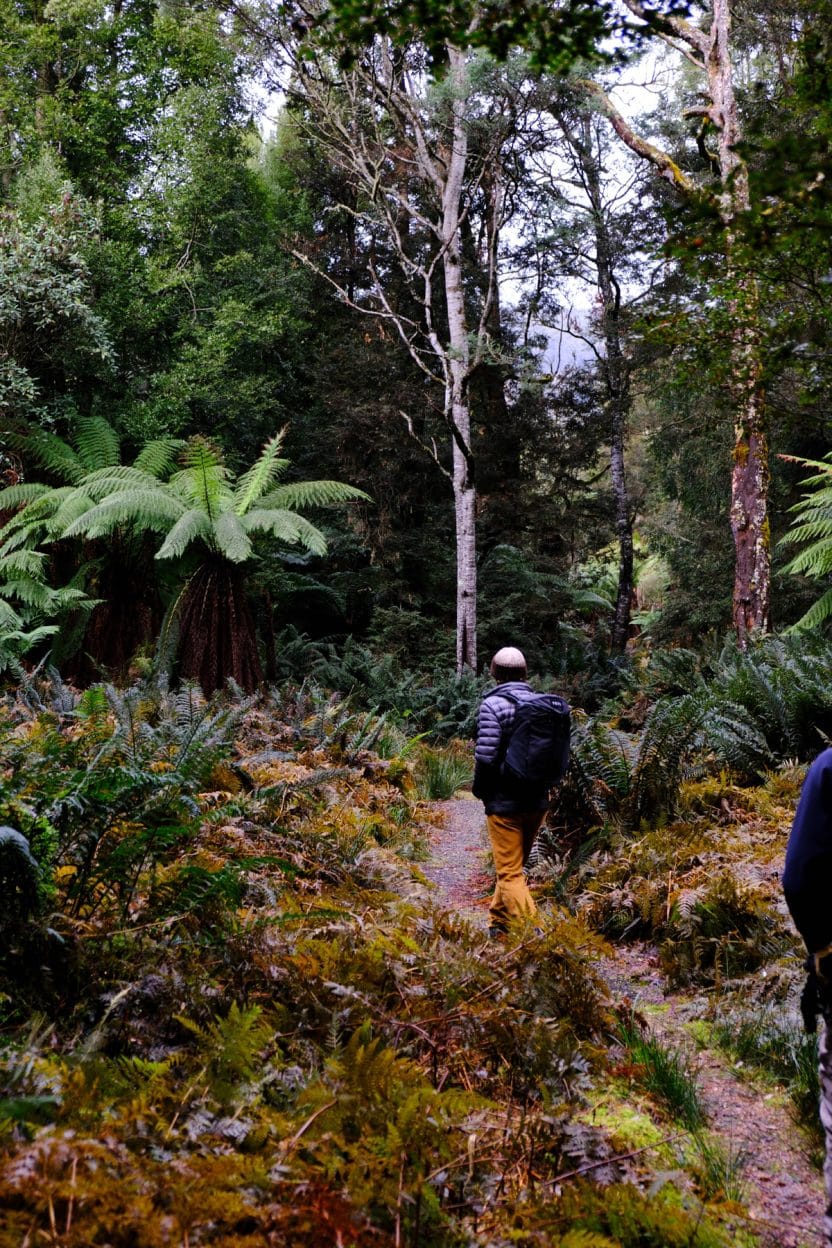
The trail in the Liffey Valley is ideal for contemplation.
Through temperate rainforest of myrtle beech, and wet and dry eucalypt forest, this walk is a kaleidoscope of verdant colours. It is enriching and meditative, and it is easy to see what captivated politician and activist Bob Brown when he first visited the Liffey Valley in the 1970s and purchased the nearby Oura Oura cottage.
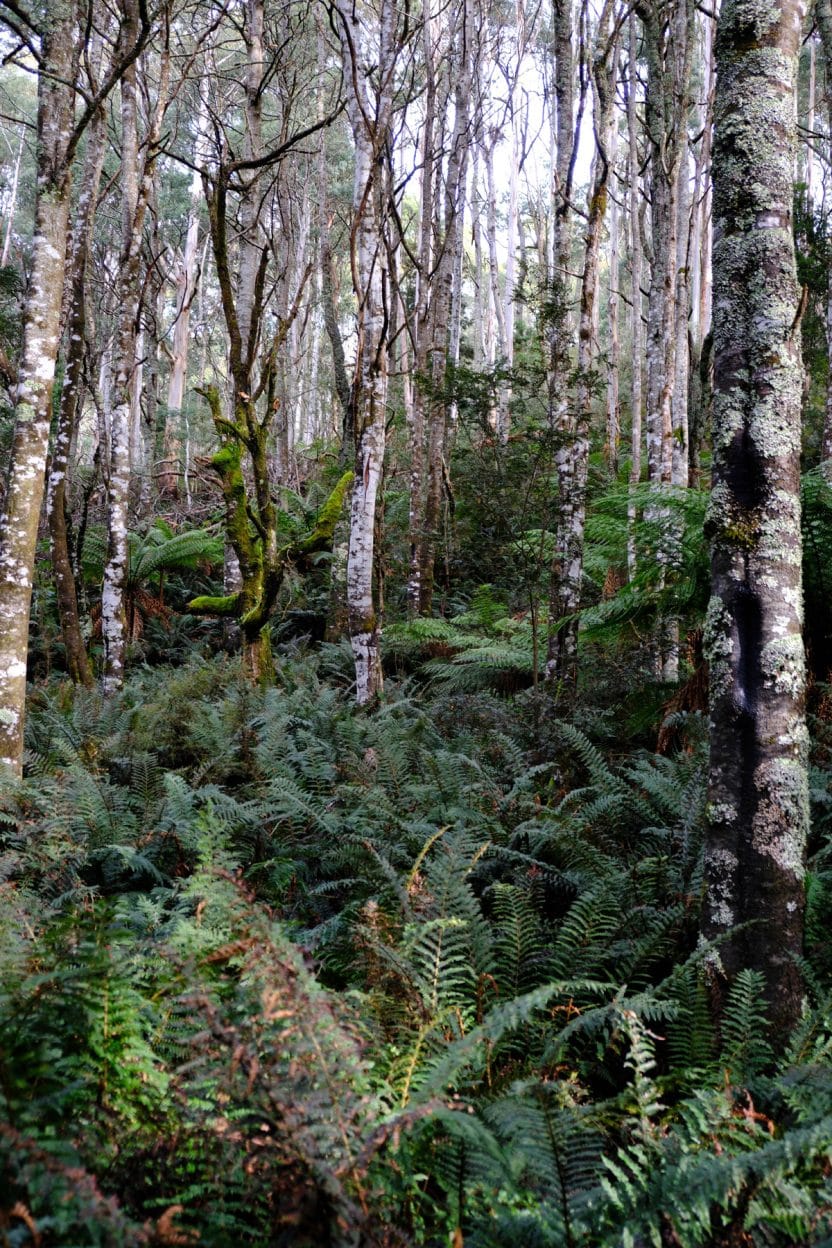
A dense stand of myrtle beech trees on the lower slopes.
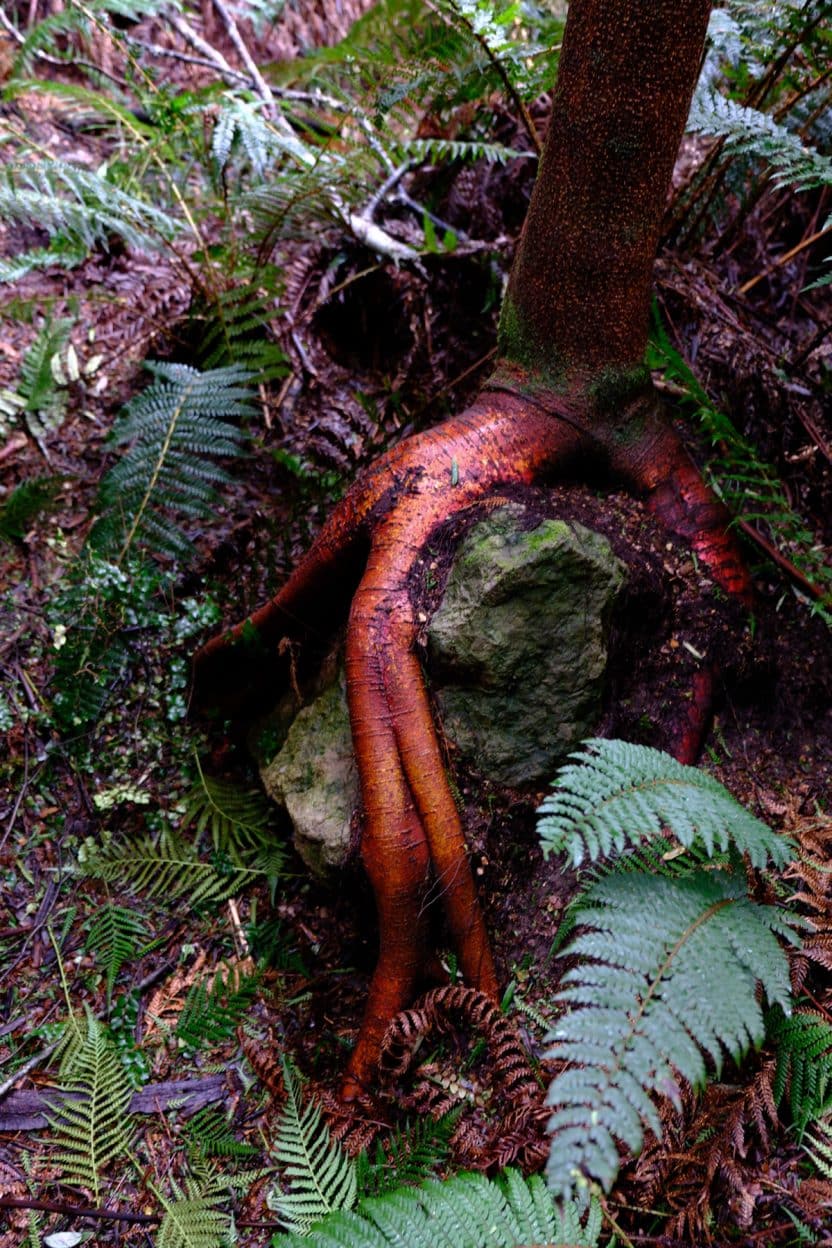
The damp temperate conditions encourage plant growth.
The 3.5-kilometre circuit is through a 105-hectare property gifted by Bob Brown to Bush Heritage back in 1991. Bob had purchased the property to save this important habitat from future logging. Bush Heritage now protects ecosystems and wildlife throughout almost 1.5 million hectares across Australia, and the Liffey River Reserve is one of five sites accessible to the public.
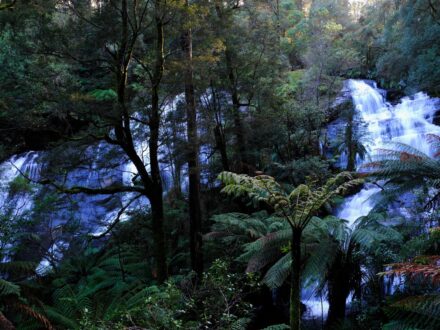
There are several other impressive walks in the vicinity. The Liffey Falls can be reached from the campground via a 6-kilometre out-and-back route along the densely forested valley. Beyond the falls the track continues another 10 kilometres with expansive views towards Projection Bluff. The falls can also be reached by a short 2-kilometre in-and- out walk by driving further up Bogan Road and following the signs. For the adventurous there is the challenging Drys Bluff hike with the trail head near the Oura Oura cottage. The track is not clearly marked, steep and reaches an elevation of 1321 metres with commanding views out to the Western Tiers. This walk should only be tackled by the fit and competent in clear weather.
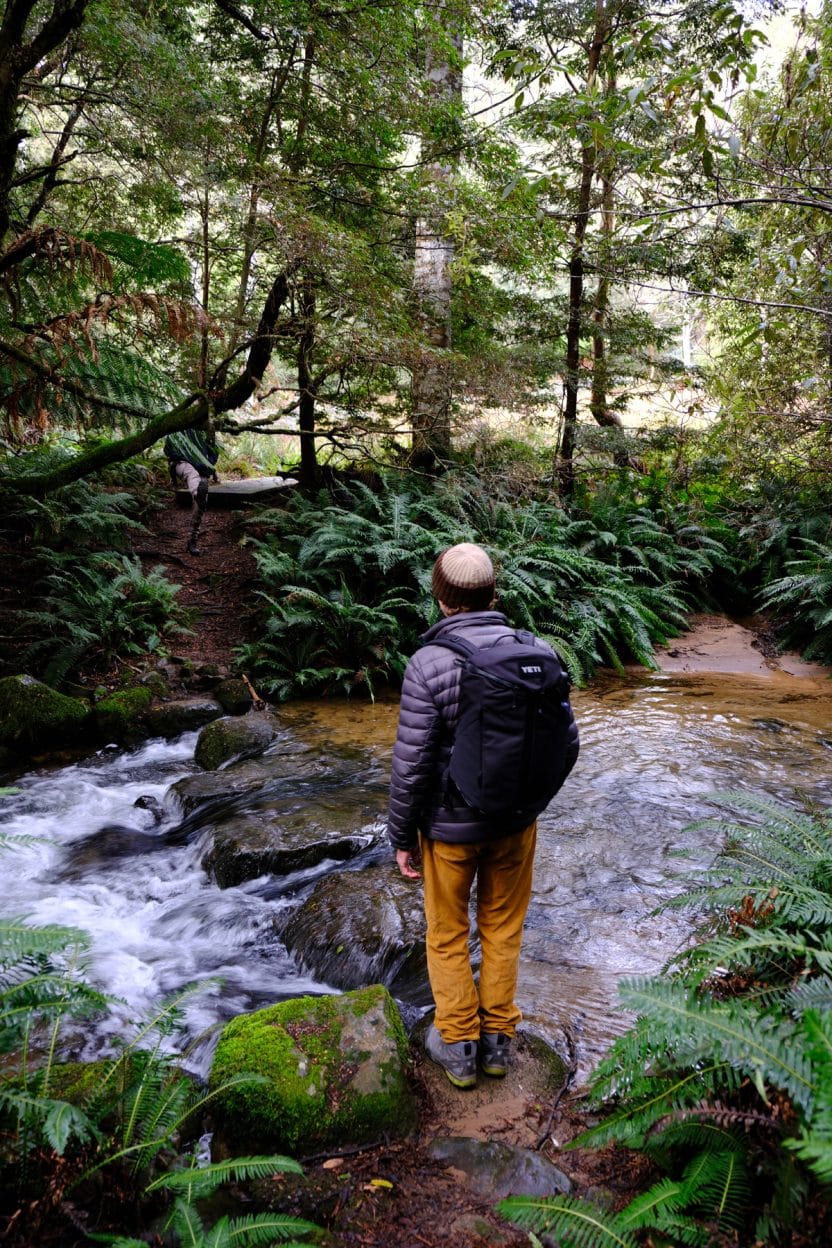
Preparing to cross Pages Creek, a tributary of Liffey River.
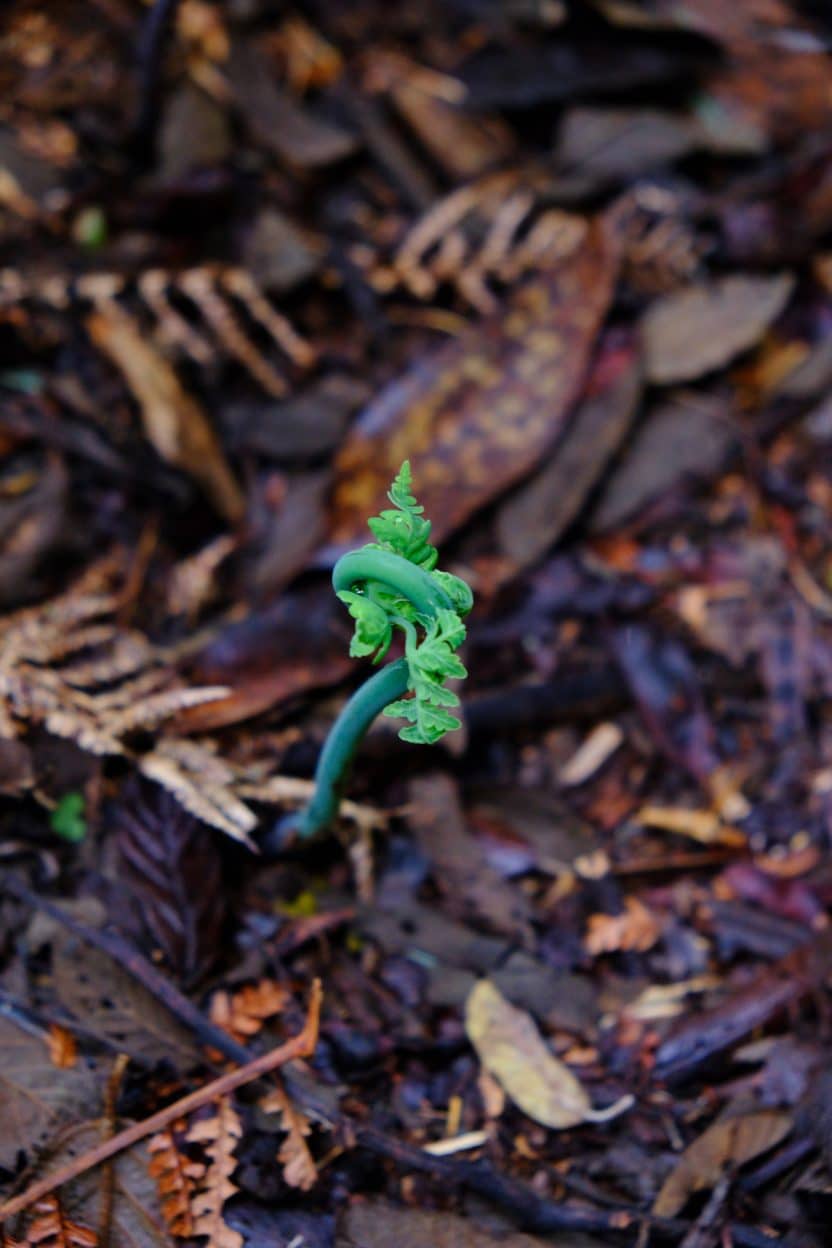
A new batwing fern frond about to unfurl.
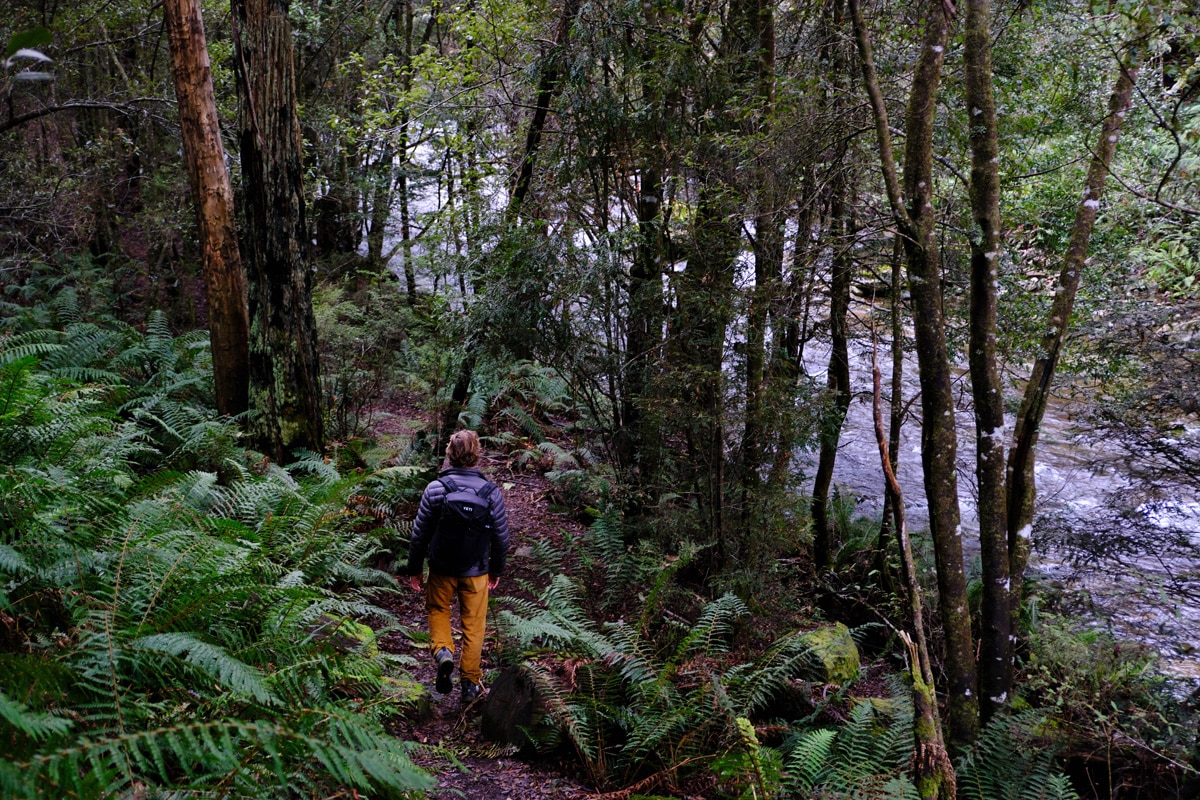
We commence the walk from the Liffey Reserve campground and head anticlockwise, initially alongside Pages Creek, a tributary to the Liffey River. Within a few hundred metres the path reaches a serene pool in the creek bordered by large boulders and overhanging branches. On a warm summer’s day this would be an ideal spot to escape the harsh Tasmanian sun. Continuing upstream following Pages Creek, we soon plunge into a lush environment of large tree ferns, sassafras and myrtle beech (Nothofagus cunninghamii) covered in epiphytes. In late April the scene changes dramatically with the ‘turning of the fagus’ as the deciduous myrtle beech leaves create an autumn show of shades of gold and orange. Up the ridge, remnant stands of white gums grow straight and tall. Only five per cent of these eucalypts remain in Tasmania as they were logged extensively and the land cleared for agriculture. The remaining stands on Bruny Island and other Tasmanian locations provide important habitats for the endangered forty-spotted pardalote bird.
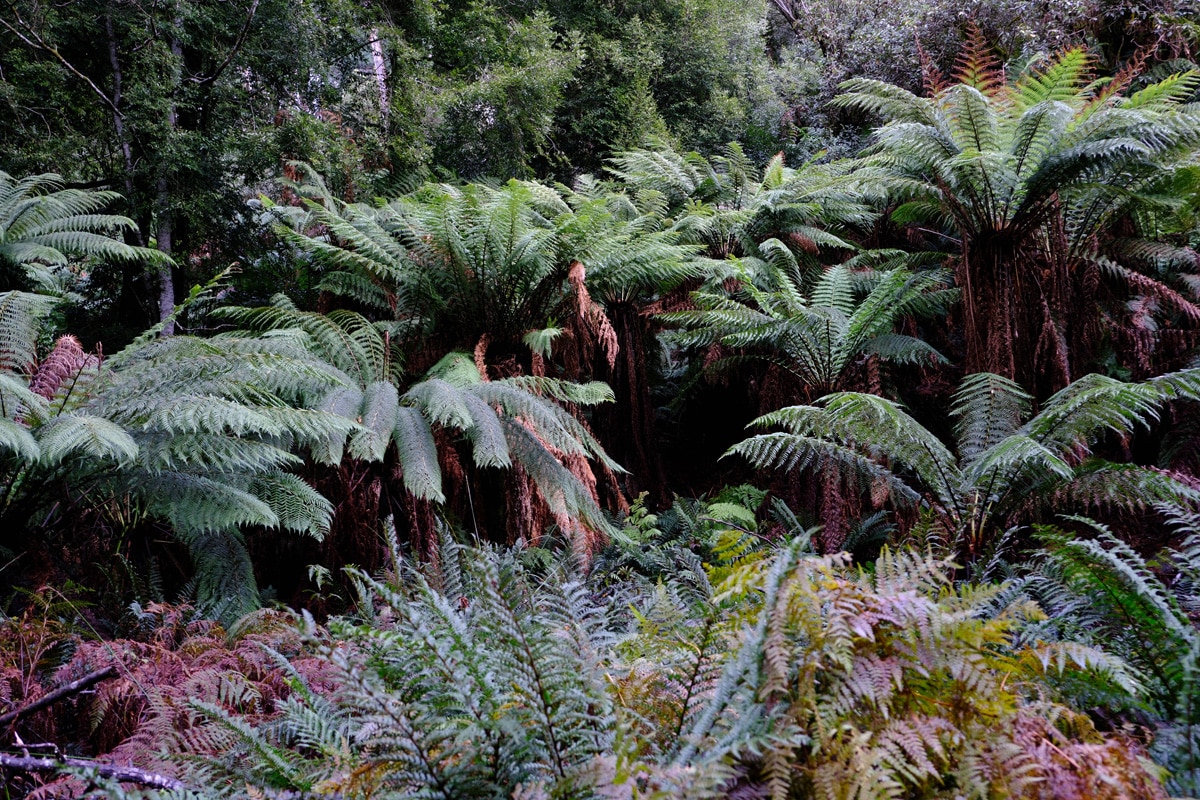
Further on, an opening appears around a swamp. Look out here for blue wren and scarlet robins flitting in the bordering understory. Up the ridge in the wet eucalypt forest, musk daisy bushes can grow to several metres. Stinkwood also thrives in this environment and coral lichen and mosses are scattered along the forest floor. Higher up, sandstone ledges can be spotted through the scrub. The overhangs are a refuge for marsupials such as bush rats, possums and spotted-tail quolls. Nearby, large remnant stumps from selective logging are habitat to grubs under the bark and a food source for yellow-tail black cockatoos.
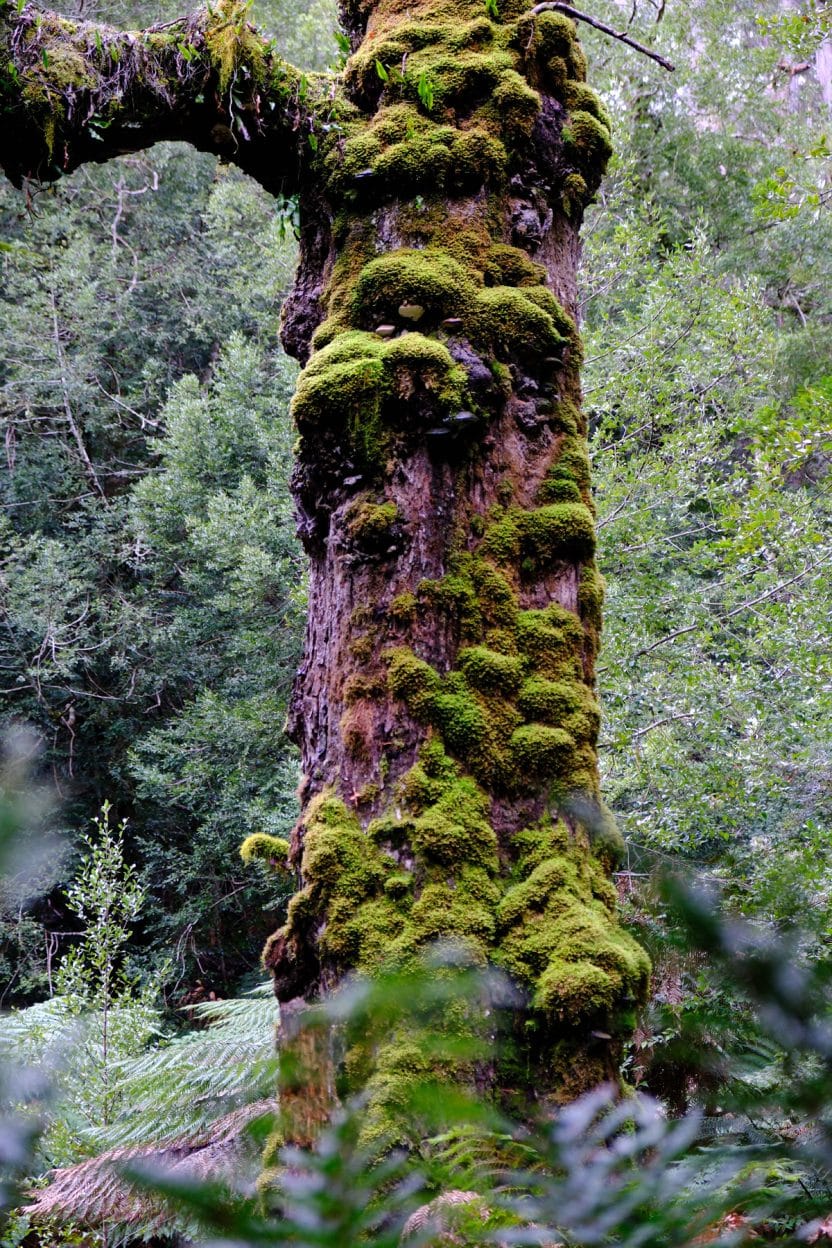
Lichen growth thrives in the moist climate on a silver wattle.
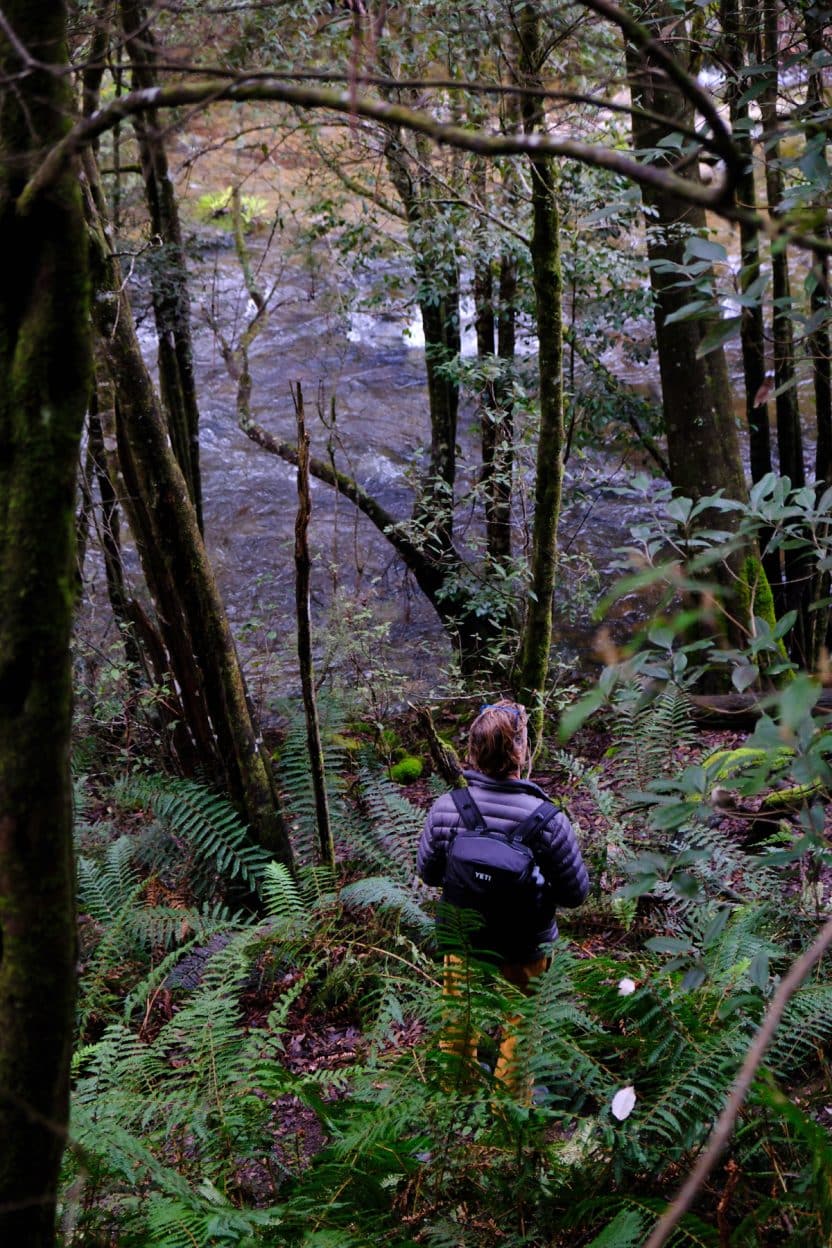
The sound of rushing water and bird calls creates a serene environment.
The broader Liffey River is reached, surrounded again by temperate rainforest. A flash to the side of the path catches our attention and we spot a white goshawk taking flight to the upper canopy. The river here is spectacular with a view upstream of cascades and dense rainforest. The deeper pools of the Liffey River are ideal for platypuses.
The clear running water is in a healthy state and is thriving with invertebrates including small crayfish, a bounty for the monotremes.
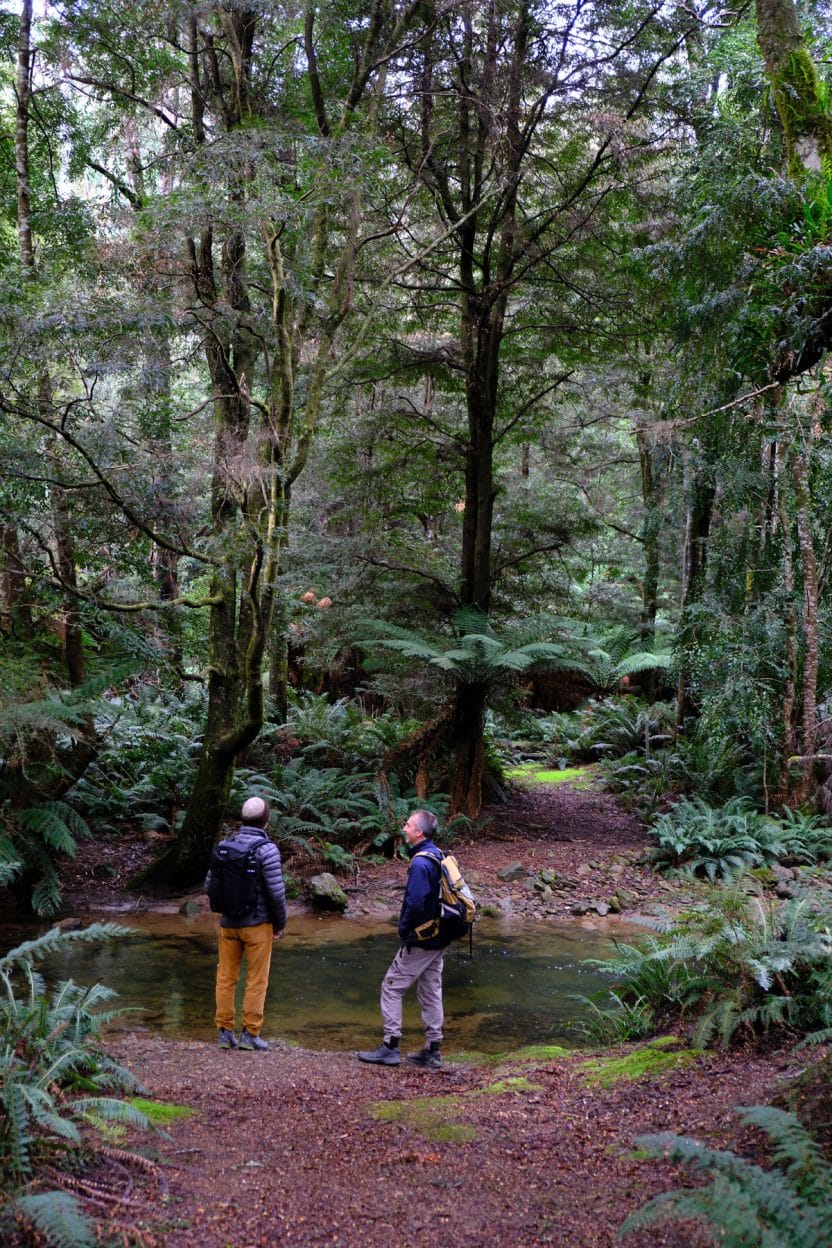
Manager of the Bush Heritage Tasmania, Mike Bretz, sharing his deep knowledge of this location.
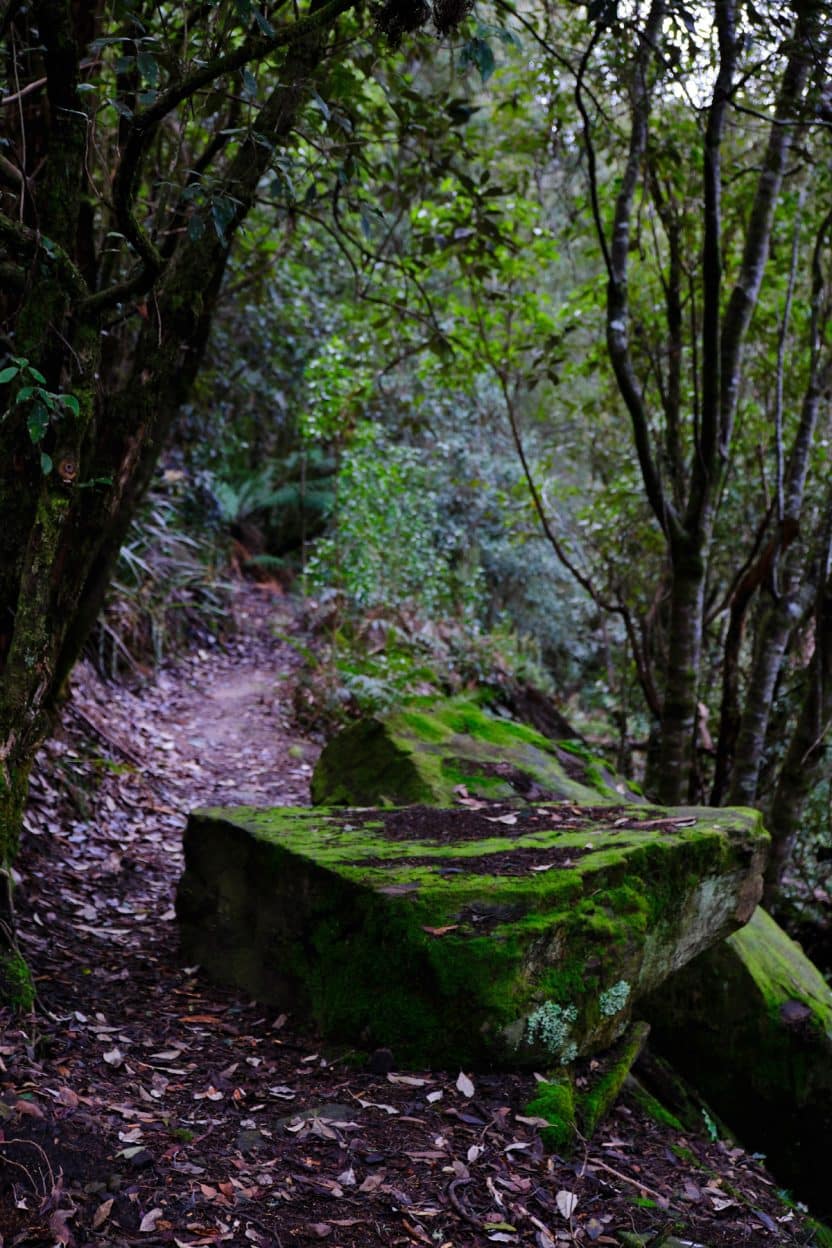
With little sunlight penetration through the canopy, mosses and lichens are prolific.
A short walk such as this can simply be a rejuvenating start to the day or a pleasant way to catch up with friends. However, this walk offers so much more. Walking silently immersed in such a fecund landscape is a contemplative experience and an ideal way to observe bird life and appreciate a diverse ecosystem.
Presented by