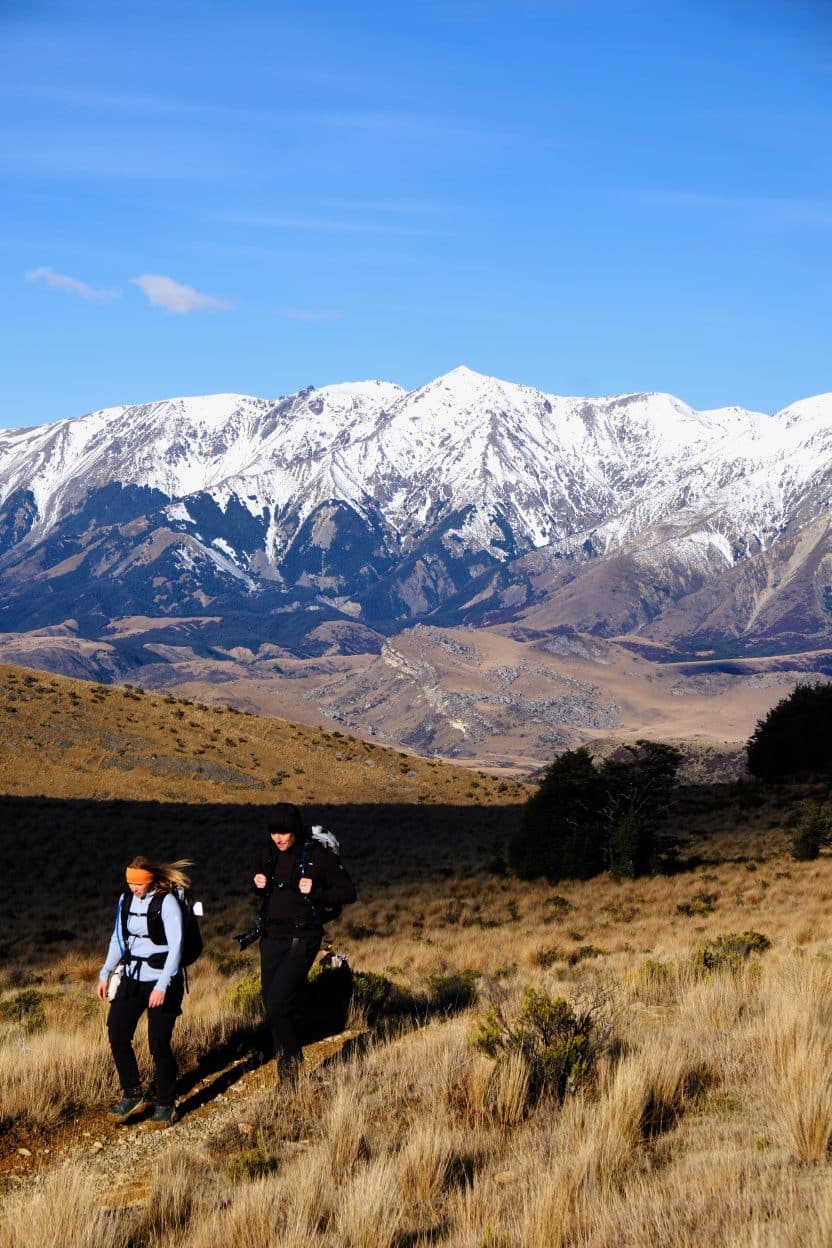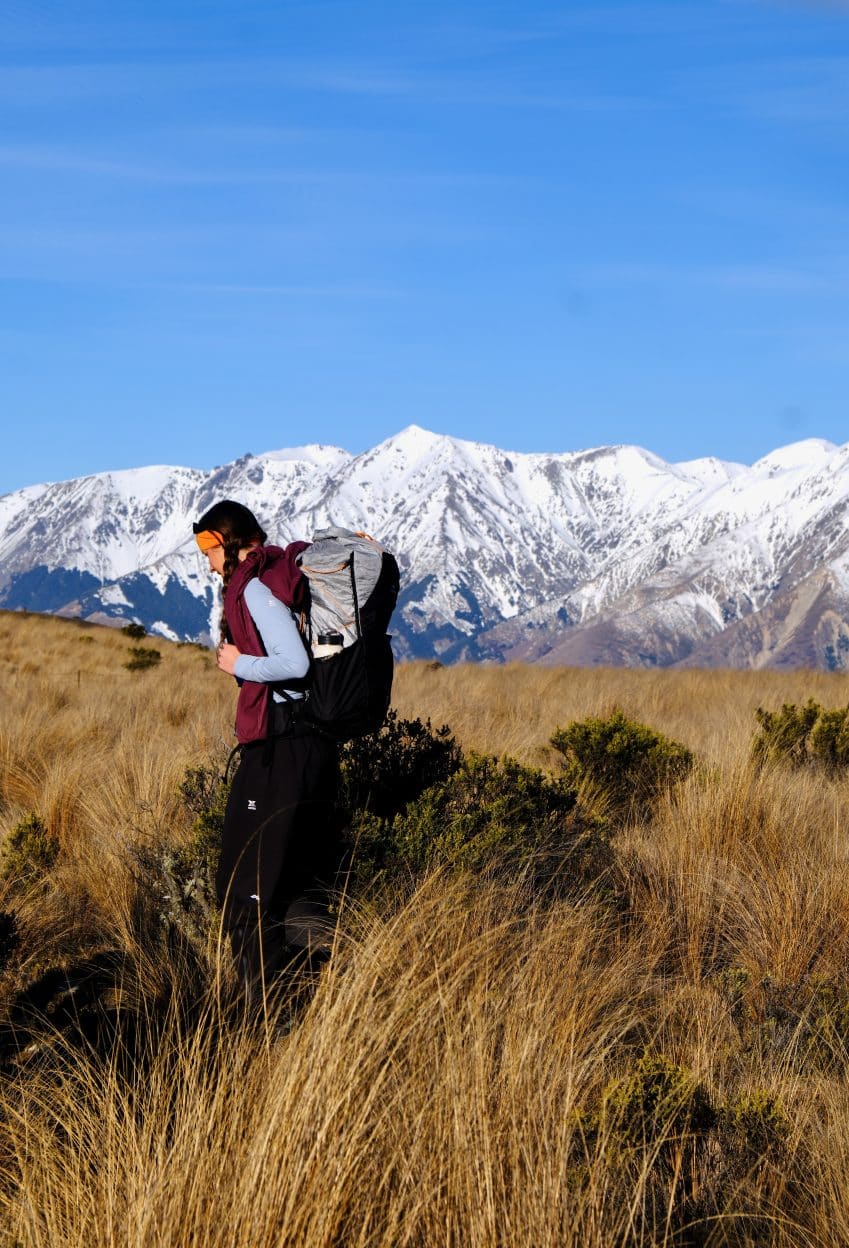
In late July Kathmandu took a group of hiking-focused media on a trip to New Zealand. We had the opportunity not only to test their new XT Series but also to sit down with their designers and material specialists. It was a fascinating few days of insight into the process of developing a range of high-tech clothing and a new backpack.
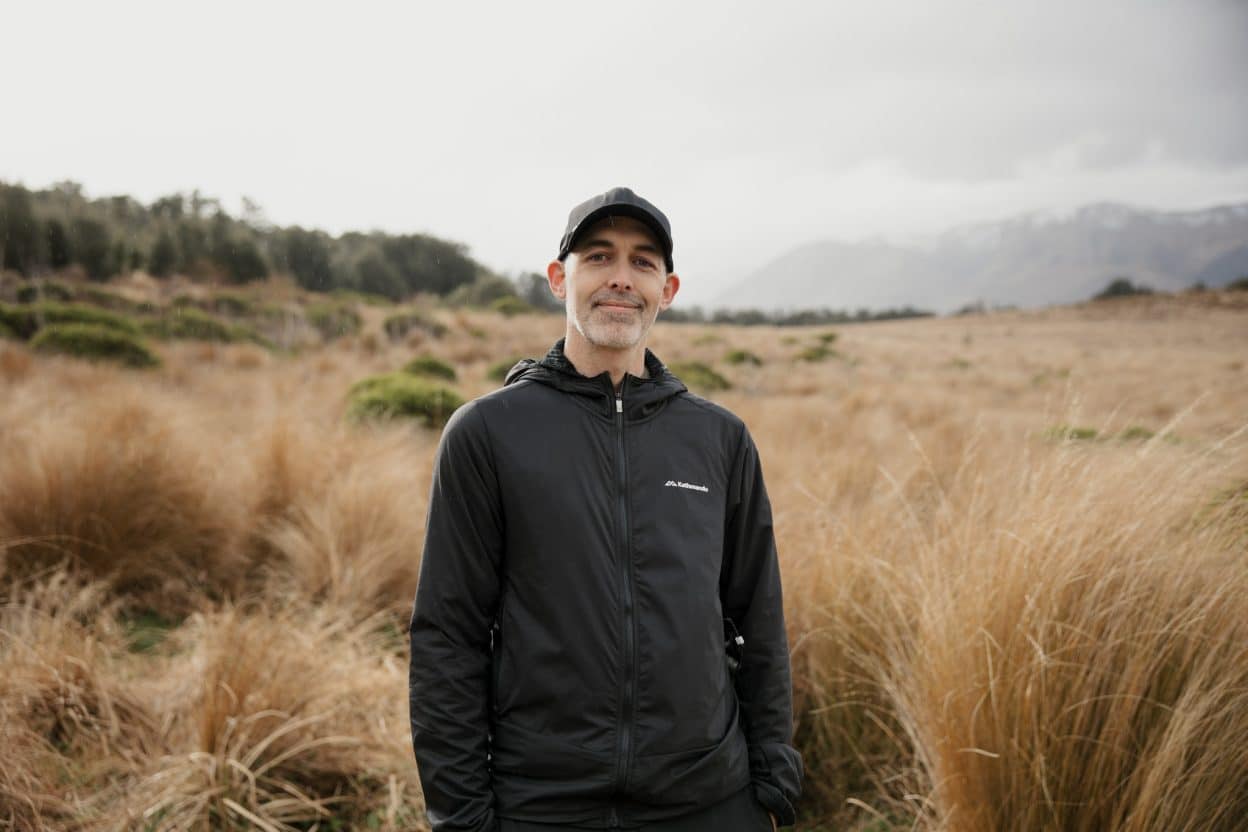
After a day out, geared up in the super lightweight layers of the XT series, among the magnificent peaks of Castle Hill, Walkers Journal editor, Tamsin O’Neill, sat down with Chad Leeder, Kathmandu’s Head of Materials.
Tell me about Kathmandu’s priorities when it comes to choosing materials and how this played out for the XT Series?
Well, I think the combination of sustainability, performance, and durability are the three non-negotiables, right? And so we do have a series of standards that we adhere to. And actually, when I came into the business, I looked at our test manual and the standards we have, and I thought, wow, these are quite high, but I believe we can actually achieve them. So when we went into XT, I was looking at old emails, and this whole range, and the idea, and the kick-off for all this, started two and a half years ago, almost closer to three years now. So it’s been a lot of, you know, discussions in the works to make this happen. But we always knew that durability and performance were important. But sustainability is that X factor. That’s the 3rd element, too, which we also weren’t going to compromise on. So coming from this world, and I’ve been doing materials for 20 years now, I knew that all three of those were possible. Yeah. And actually, what it came down to is which types of technologies, or which partners, or which fibre technologies we were going to partner with. Because we do have, actually, multiple options in the outdoor space to choose from.
So more specifically, could you just touch on some of the material developments that you made?
I’ve seen a lot of compromise, and this is not a knock on any other business or any other brand, but, the compromise on durability at the sake of weight. So actually, even our fibre, woven as a plane wave, wasn’t hitting the mark for tear strength, durability, abrasion resistance, and pilling and snagging. So what we did was we actually created it into a ripstop, using different fibre types to create a cross-section or to create a grid of more durable fibres. So basically, if it punctures or if it tears, some of those more durable fibres can stop the tear from progressing. Right. Or prevent those things from actually occurring. So that was, when you talk about constructing from scratch, the debate between whether we do a plain weave or a ripstop just came down to, like, pure function. Which one worked, which one didn’t, right? As far as the rain layer, that was actually a lot harder because we knew that we wanted the rain jacket to have stretch. We were talking earlier today about spandex, and how spandex sometimes can degrade over time, lose its shape, if you’ve ever worn yoga pants, you know they lose their shape over time. Spandex has its place. We use it a lot. But for this particular series, we want these jackets to last a long time. We actually created stretch fibres made of nylon. So, the cool part is, the jackets are made of nylon. Straight fibres are nylons, but also, the stretch fibres are nylons. Yeah. And what that does is now our stretch fibres, instead of degrading or losing shape over time, they actually maintain the same lifespan as the other fibres in the product.
What about recyclability? Can you talk about that?
I think a big point in why we chose the fibres we chose is because nylon is a recyclable fibre, but because it’s recyclable, we can also acquire recycled versions of the nylon. And obviously, the same thing goes with polyester, right? So we can recycle polyester, but we can also acquire recycled versions of polyester. The one product that we’re working on that’s kind of been hard to get, you know, recycled into the lines, is the polyethylene ALUULA™ backpack fabric. Simply because the feedstock isn’t as abundant as things like nylon and polyester. So when we were choosing the most durable fabric ever for this backpack, we at least needed to make sure, from a sustainability standpoint, that, one, it was recyclable. And so the good news is that polyethylene can be broken down and recycled. Yes. Additionally, a lot of, you know, other durable fabrics will laminate or add a waterproof coating to the fabric in the form of a polyurethane coating. So, can you, you can imagine, like, a nylon with a polyurethane, those two materials don’t mix. So it almost prevents it from being recyclable unless you use some very, very advanced processes to break down those two elements into their own separate parts. Not ideal, not perfect. You can’t really scale that. Yep. You know. But the cool thing about the ALUULA™ fabric is that the waterproof coating on the back is also polyethylene. So it’s what we call in the industry a mono-material construction. So we’ve got a coating made of the same material as the woven fabric. From a sustainability perspective, that basically made our decision for us. Yeah. It’s a big space.
That’s great. Repairability is another factor. Does Kathmandu have a program at the moment?
I mean, the pack comes with a patch that can be applied using heat but we intend that it never needs to be repaired anyway. It’s like such a bomb proof fabric, right? But yeah, as far as the garments, you know, again, same theory. We hope that you don’t need to, because we’ve chosen and met all these high standards that we have, even in these lightweight constructions. We have the Kathmandu Redo program where we actually acquire used gear, repair it, and then sell it for a discounted price. I think less about us being able to take back products, we could probably do that- but more about the Australasia region: like, who do we deliver it to once we take it back? We can take it back; we can repair it. Awesome. There are even services in Christchurch that can repair products. But as far as garment recycling. Unless we’re shipping into Asia, we need to find some partner domestically, whether it’s in Australia or New Zealand, who can also help do the recycling part of it. It’s a big challenge.